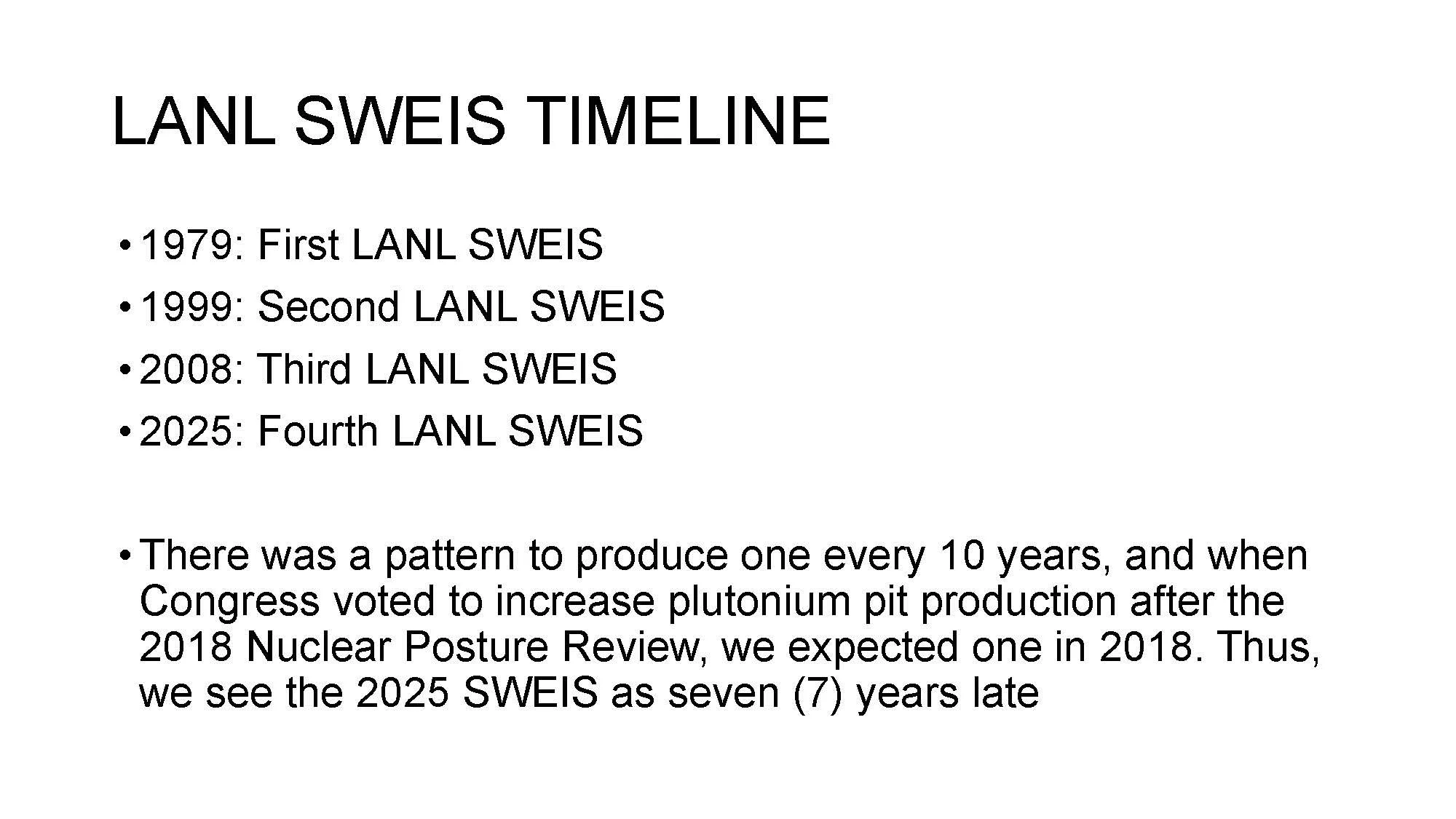
LANL Site-Wide Environmental Impact Statement (SWEIS)
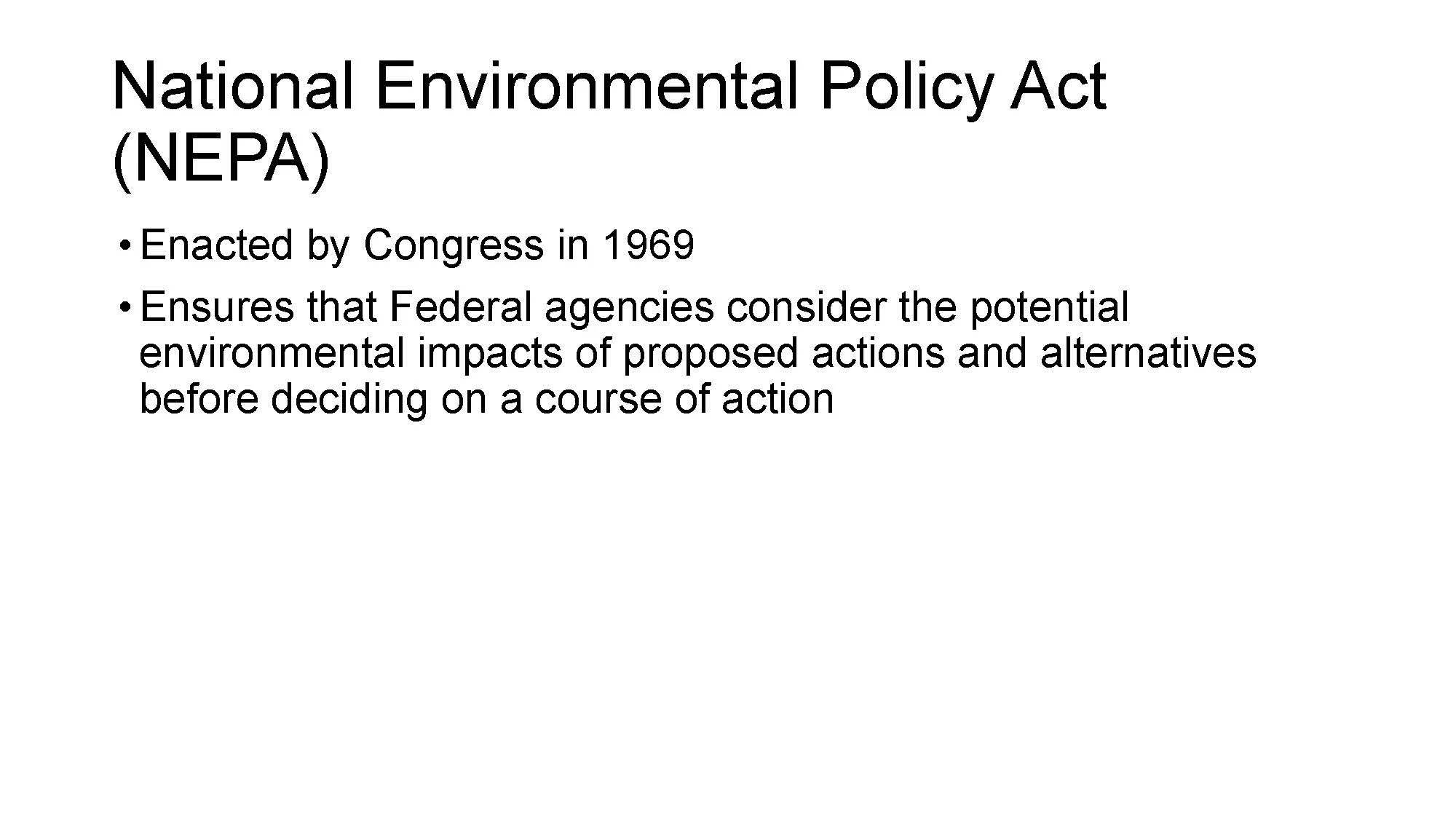
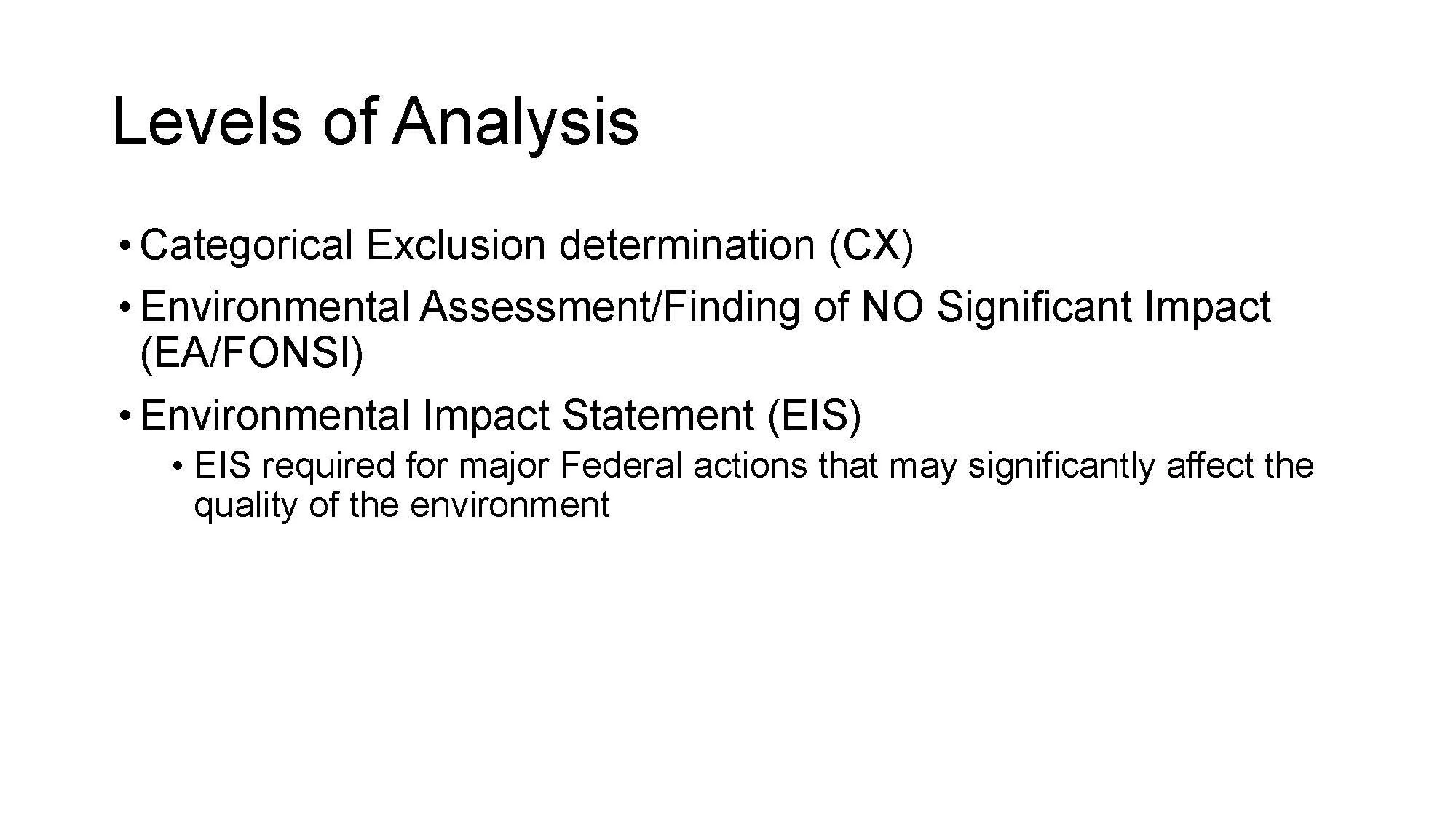
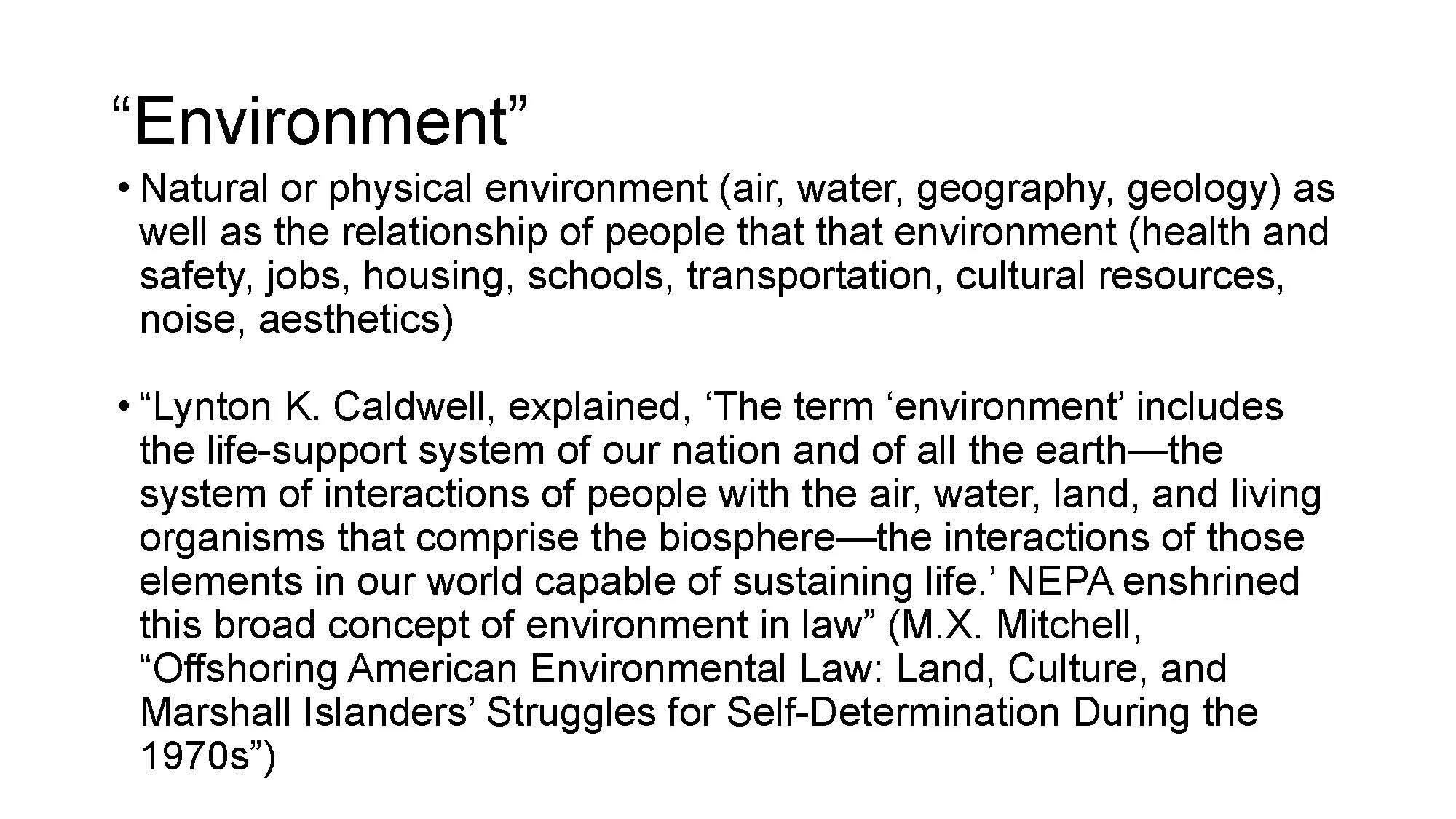
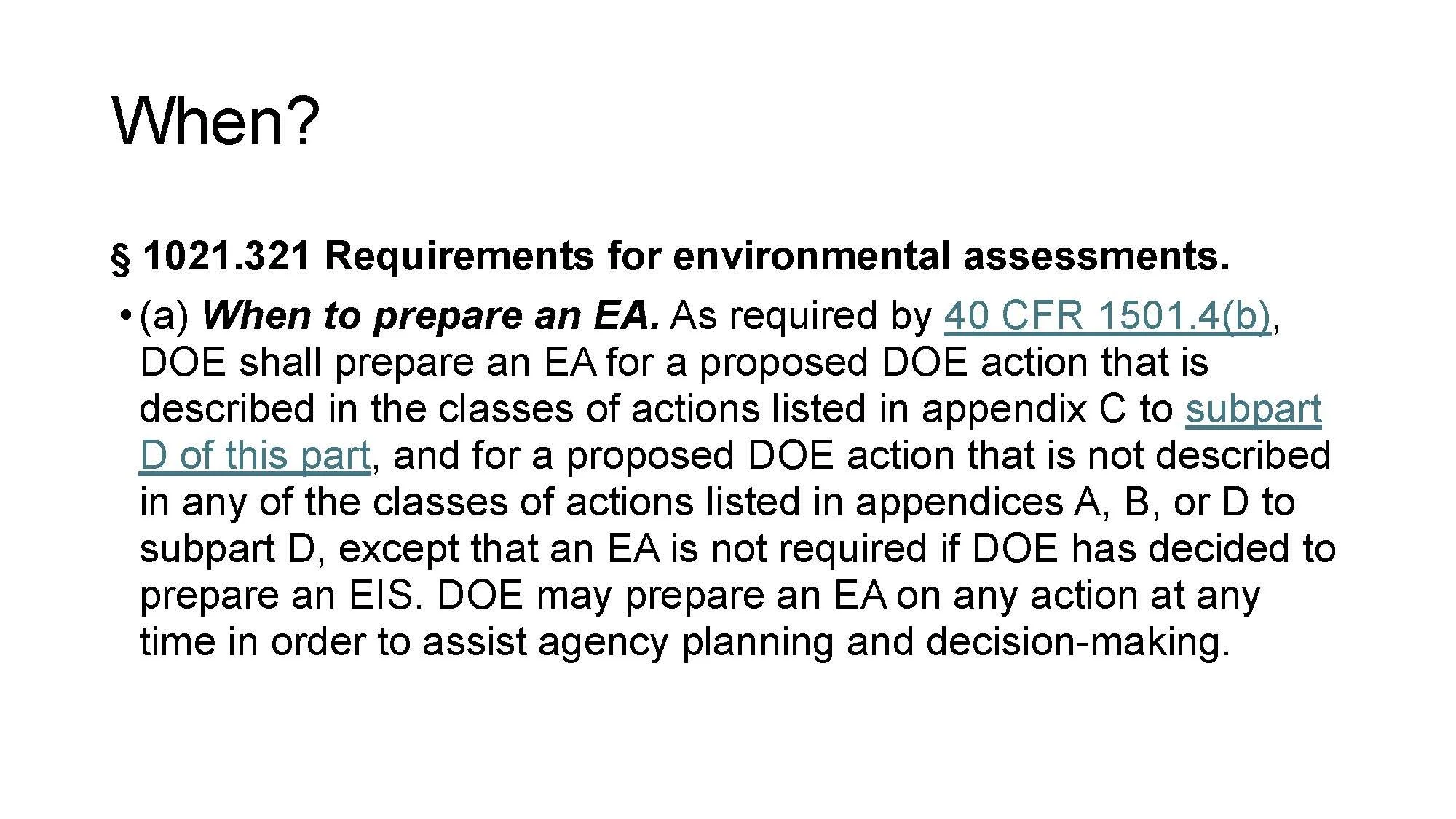
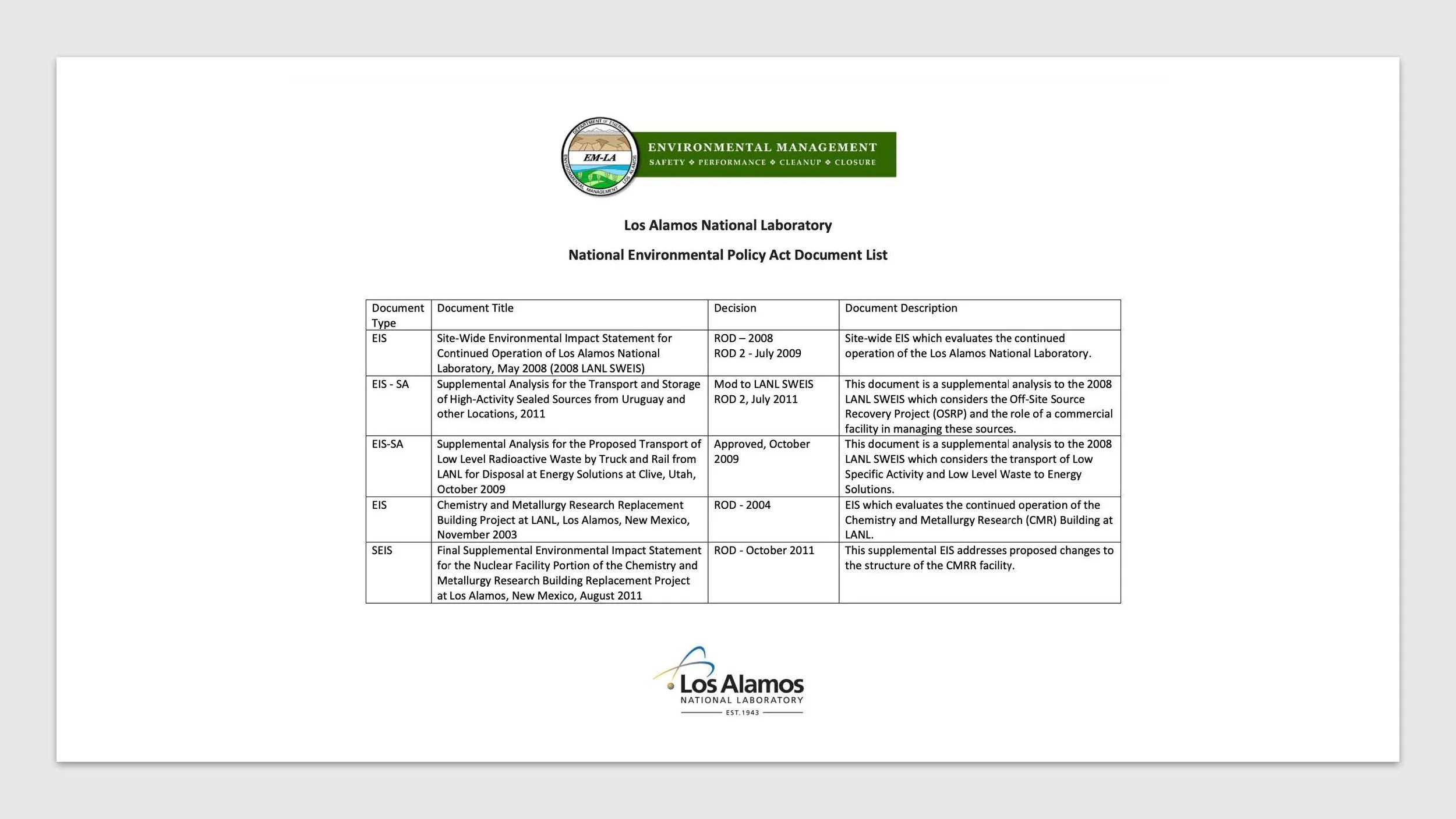
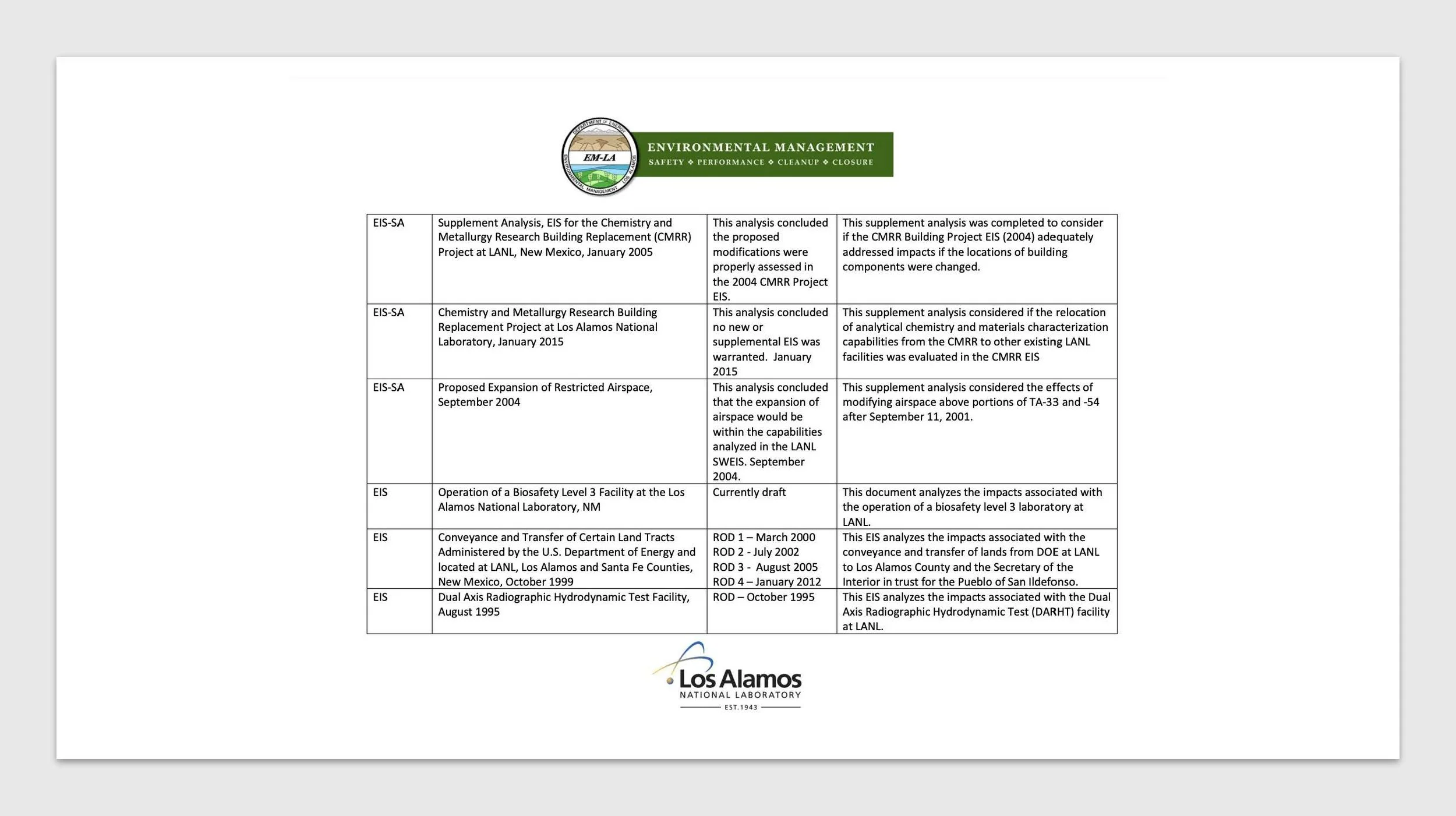
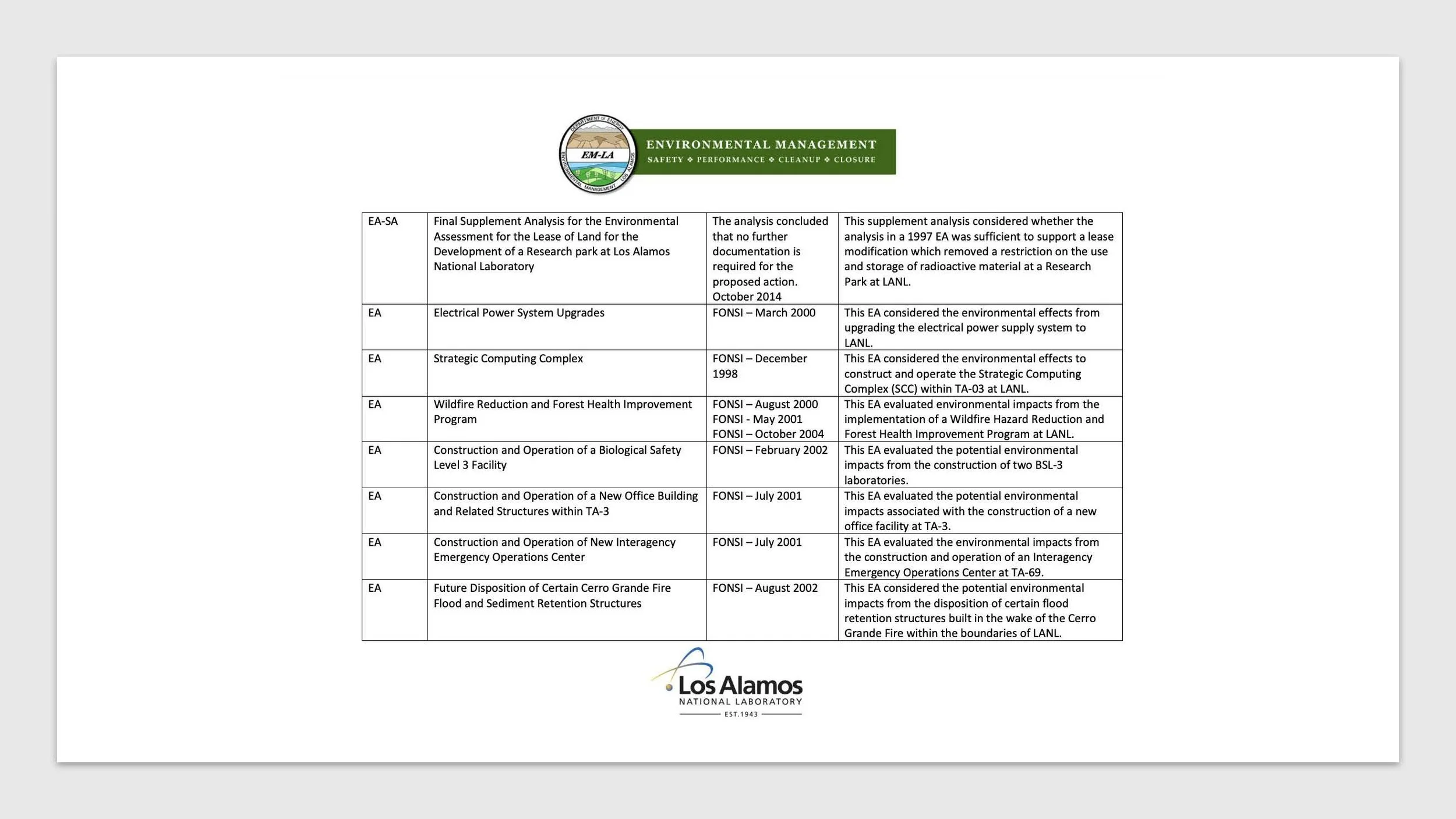
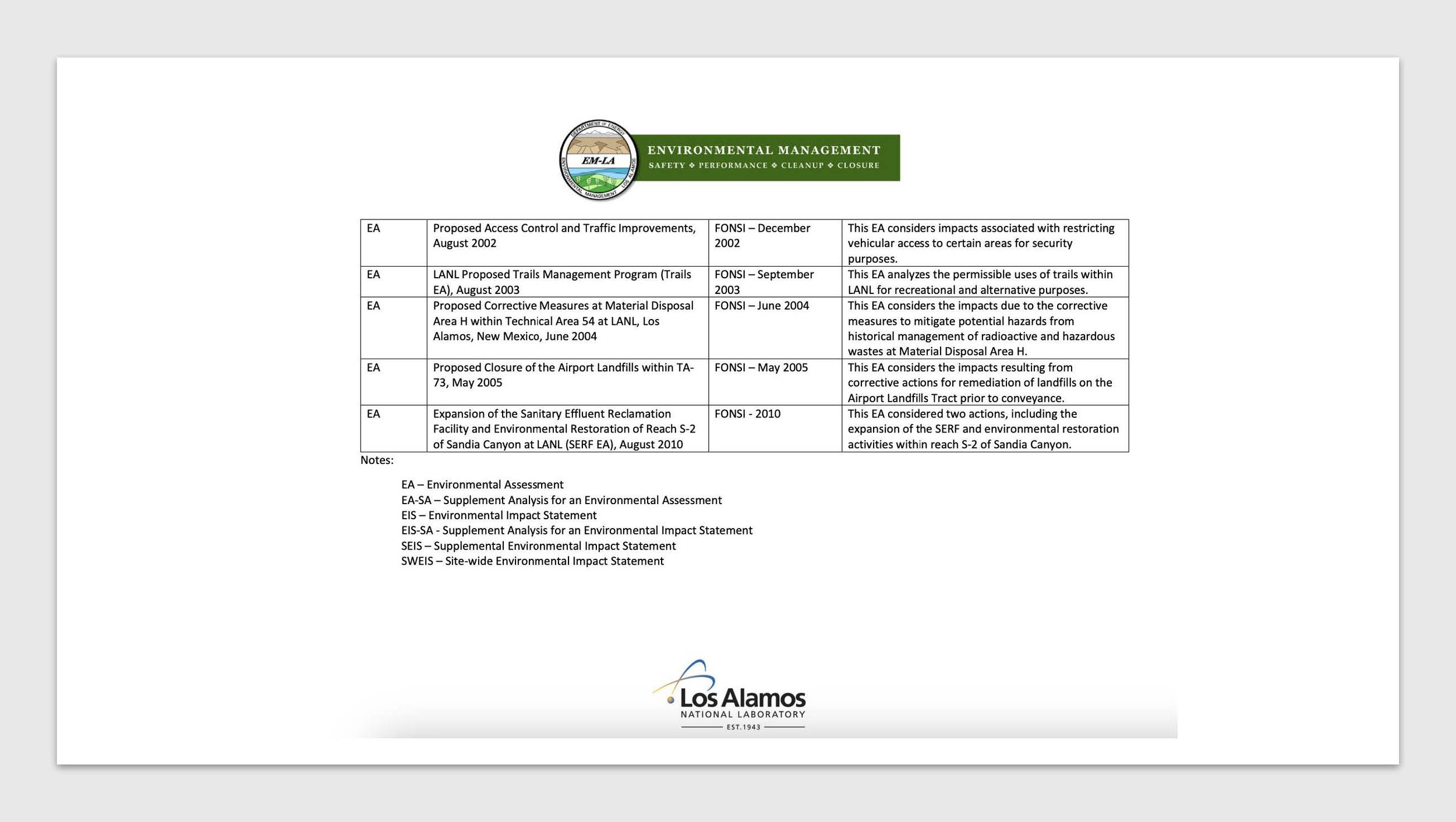
LANL is obligated by law to conduct a regular analysis of LANL in accordance with the National Environmental Policy Act (NEPA). Environmental Impact statements such as the SWEIS are required for major federal actions that may significantly affect the quality of the environment.
The Record of Decision for the SWEIS for Continued Operation of the Los Alamos National Laboratory was made on March 17, 2026, finalizing the LANL SWEIS and LANL’s decision to move forward with the Expanded Operations Alternative.
CCW Letter to DOE/NNSA on April 21, 2026
RE: Urgent Request to Reopen Public Comment Period for Final LANL SWEIS and Record of Decision, DOE/EIS-0552
Dear Secretary of Energy, Administrator of the National Nuclear Security Administration, and Manager of the NNSA Los Alamos Field Office,
On behalf of the Communities for Clean Water Coalition, I’m writing to urge the Department of Energy (DOE) and the National Nuclear Security Administration (NNSA) to reopen a formal public review and comment period on the Final Site-Wide Environmental Impact Statement (SWEIS) for Los Alamos National Laboratory (LANL), and to take corrective action following the recent issuance of the Record of Decision (ROD). This letter is submitted during the Environmental Protection Agency’s (EPA) Notice of Availability (NOA) review period for the Final SWEIS and ROD; however, this limited review opportunity does not substitute for a formal NEPA comment period.
Communities for Clean Water (CCW) is a coalition of organizations whose mission is to ensure that community waters impacted by Los Alamos National Laboratory (LANL) are kept safe for drinking, agriculture, sacred ceremonies, and a sustainable future. Our coalition includes Amigos Bravos, Breath of My Heart Birthplace, Concerned Citizens for Nuclear Safety, Honor Our Pueblo Existence, New Mexico Acequia Association, Partnership for Earth Spirituality, Tewa Women United, Elder Kathy Sanchez, and ecological artist Kaitlin Bryson.
The LANL SWEIS is a sweeping, long-term planning document that will guide federal actions related to nuclear weapons production, waste management, environmental cleanup, and infrastructure development in Northern New Mexico for years to come. The decisions informed by this analysis carry significant implications for surrounding communities, including impacts to air quality, surface water, groundwater and drinking water resources, public health, and culturally significant landscapes.
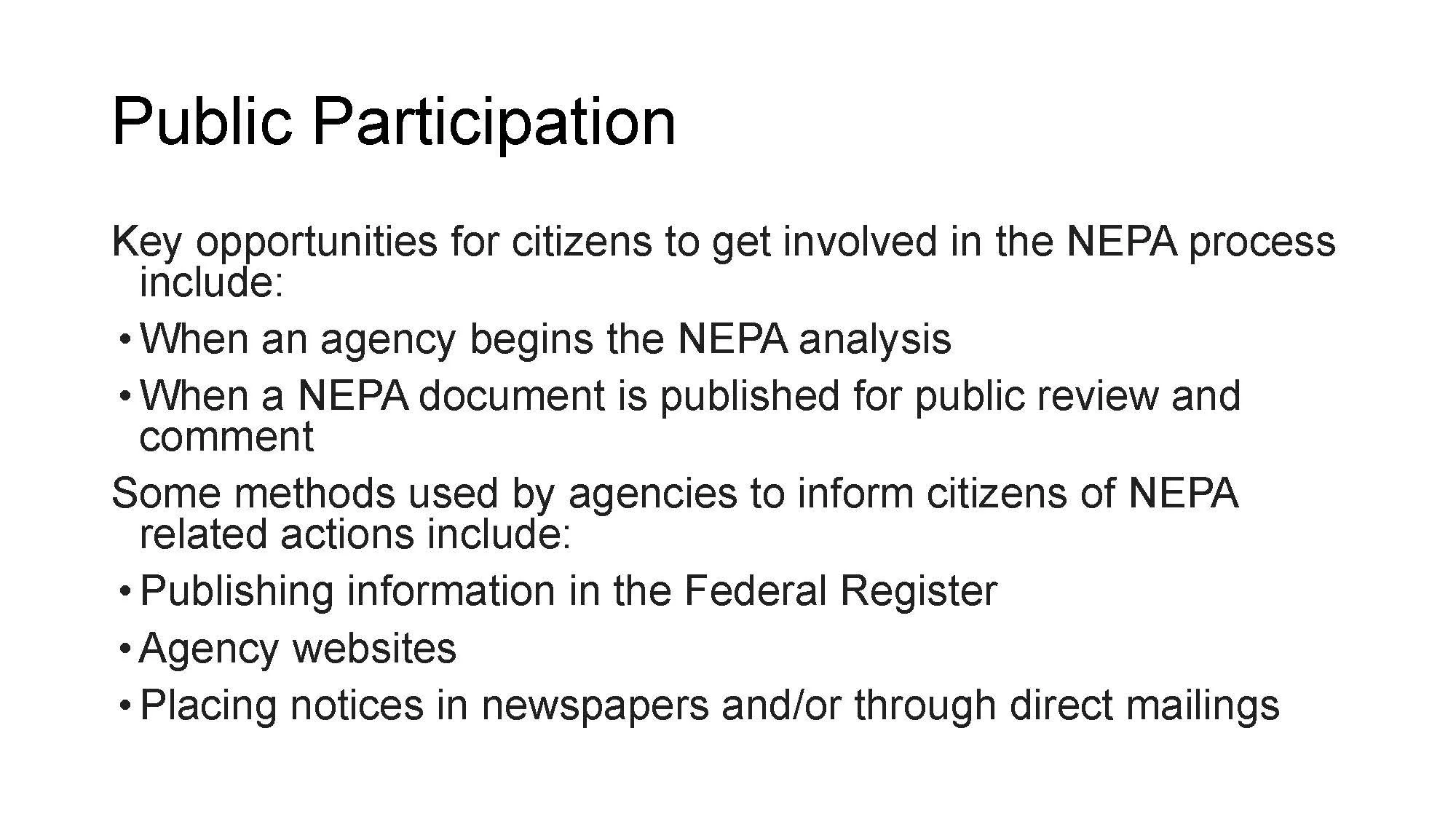
Despite the scale and importance of these decisions, DOE NNSA did not provide an opportunity for the public or affected communities to review and respond to the Final SWEIS prior to issuing the ROD. This approach undermines the core purpose of the National Environmental Policy Act (NEPA), which is to ensure informed, transparent decision-making grounded in meaningful public participation before and after key decision points.
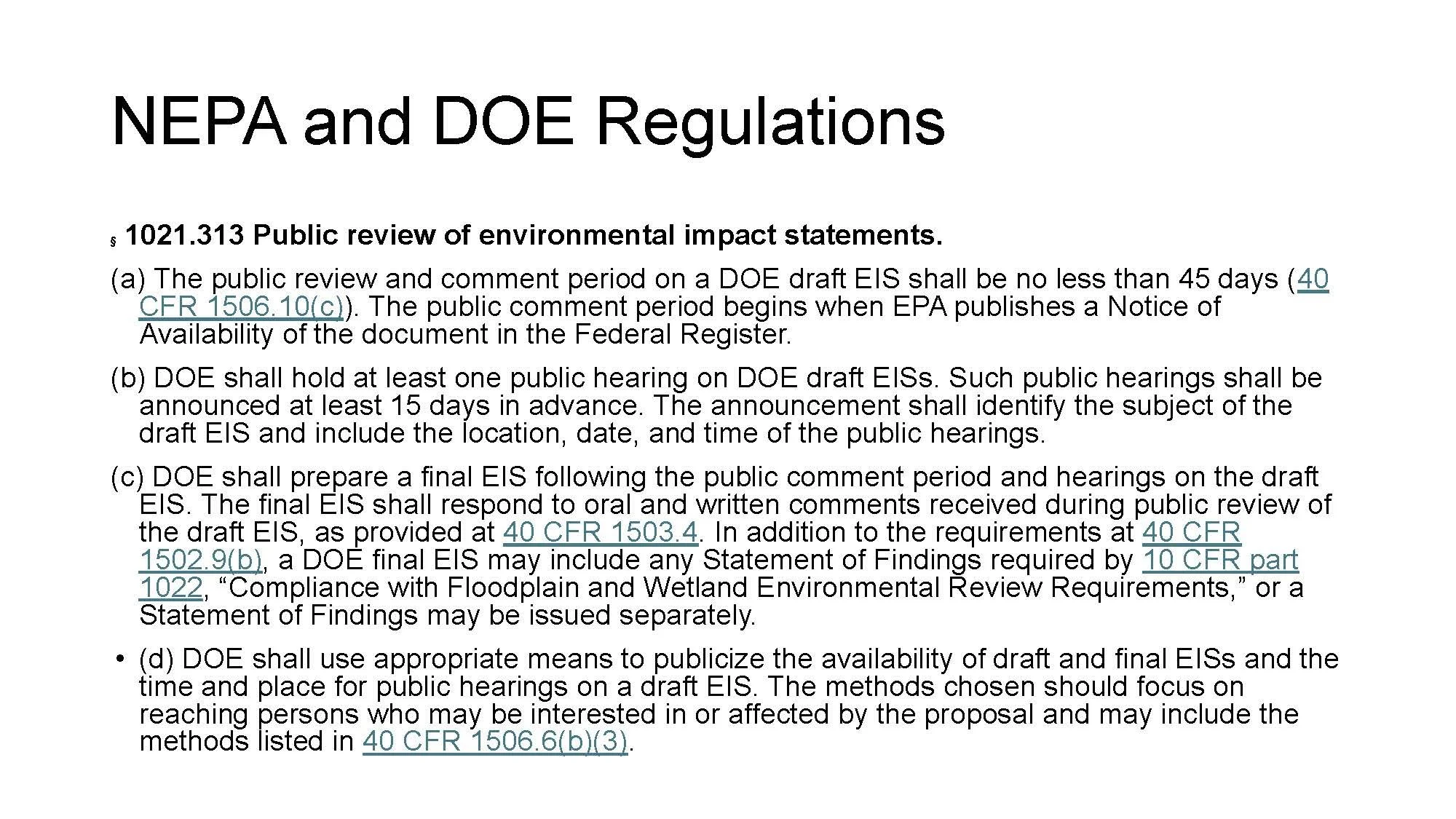
EPA’s role in implementing NEPA includes publishing Notices of Availability for Final EIS documents and facilitating a limited public review period—generally 30 days—following publication. While this process allows for submission of comments, it does not constitute a formal NEPA comment period, does not require DOE NNSA to respond to comments, and does not reopen the agency’s decision-making process. Reliance on this limited review window in lieu of a formal comment opportunity raises serious concerns regarding compliance with NEPA’s procedural requirements and long-standing federal practice.
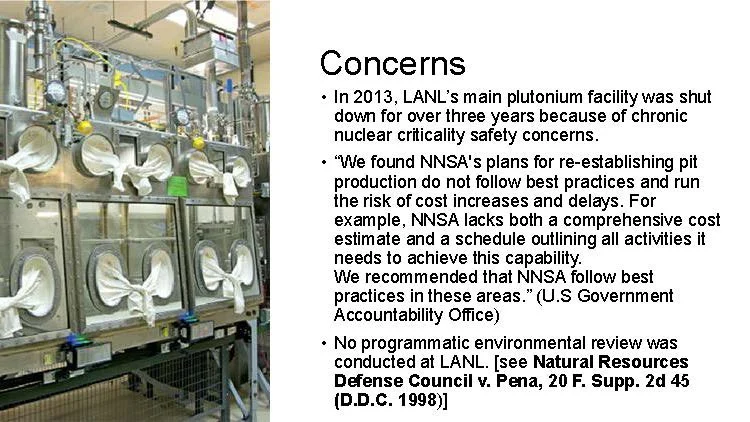
While DOE NNSA states that it considered public comments in preparing the Final SWEIS, many of the most significant concerns raised during the Draft SWEIS process remain unresolved or only partially addressed. Although the Final SWEIS includes limited updates, it does not provide enforceable mitigation measures, fails to resolve uncertainties regarding long-term radioactive waste disposal and storage capacity, and continues to rely on incomplete or generalized analysis of groundwater contamination, cumulative impacts, and environmental justice concerns. In addition, key issues—including the integration of connected actions such as the Electrical Power Capacity Upgrade (EPCU) project, meaningful Tribal consultation, and the full scope of impacts from expanded plutonium pit production—remain inadequately analyzed or deferred.
Given these deficiencies, meaningful public review of the Final LANL SWEIS is not only warranted—it is necessary to ensure informed decision-making and maintain public trust.
Accordingly, we urge DOE NNSA to:
Reopen a formal public comment period on the Final LANL SWEIS, including sufficient time for review and in-person public comment sessions in affected communities;
Not rely on EPA’s Notice of Availability review period as a substitute for formal NEPA public participation requirements;
Review, consider, and substantively respond to comments submitted during the EPA NOA review period, but recognize that this step alone is insufficient without reopening a full comment period;
Supplement the existing NEPA analysis, including through issuance of a Supplemental Environmental Impact Statement (SEIS), to address unresolved issues, new information, and regulatory and administrative changes;
Provide clear, substantive, and accessible responses to public and Tribal comments raised during the Draft SWEIS process, including how those concerns were addressed or why they were not incorporated in the Final SWEIS;
Ensure meaningful Tribal consultation with Pueblo and Tribal Nations regarding the decisions reflected in the ROD and any subsequent implementation actions;
Reevaluate the ROD, as appropriate, following completion of additional public review and analysis to ensure compliance with NEPA and other applicable legal obligations;
Ensure full compliance with NEPA’s public participation requirements prior to implementing major federal actions based on the SWEIS.
Restoring a formal public comment period—rather than relying solely on EPA’s limited Notice of Availability review window—is essential to maintaining public trust and ensuring legally sound and informed decision-making. Communities, including Tribal Nations and those most directly impacted by LANL operations, deserve a meaningful opportunity to review and respond to the Final SWEIS, particularly where significant concerns remain unresolved.
Your prompt response to our letter is greatly appreciated.
Respectfully,
Kalyn Mae Finnell, Coordinator, Communities for Clean Water Coalition
LANL SWEIS Alternatives
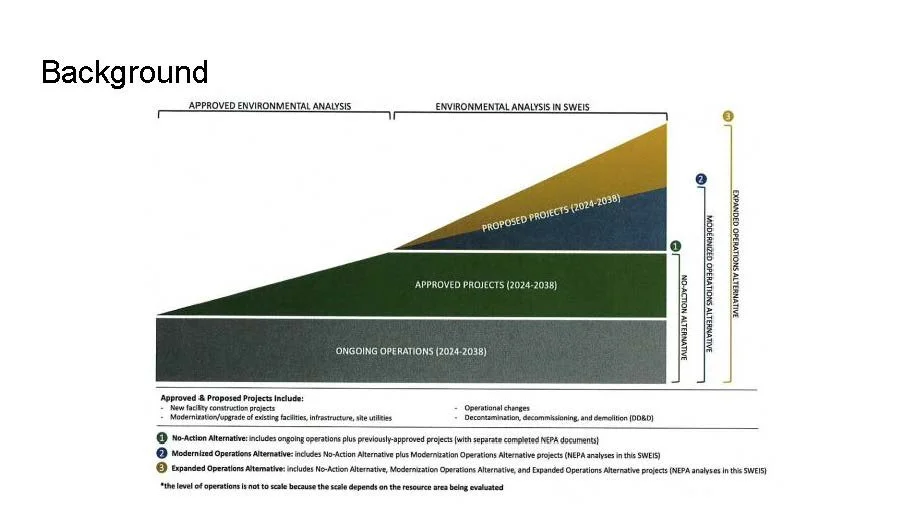
The LANL SWEIS analyzed three alternatives:
1. No-Action Alternative (which is a misleading name, because it includes the implementation of new projects which have not yet started) - Approved projects include:
Construction footprint of 33.5 acres
Upgrade/utility/infrastructure footprint of 192 acres
Decontamination, Decommissioning, and Demolition projects footprint of 37.4 acres
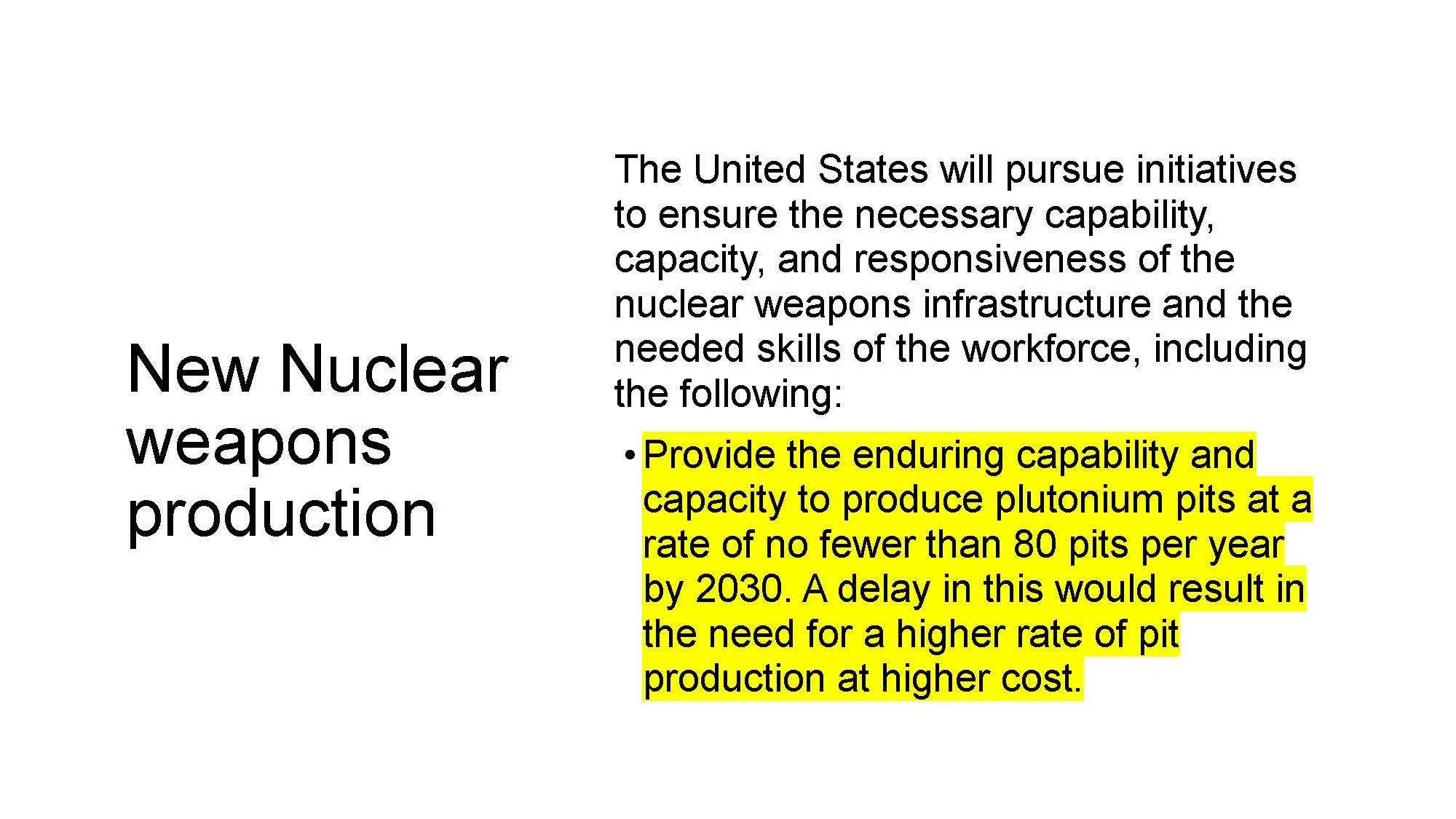
Increased Plutonium Pit Production
Electrical Power Capacity Upgrade Project (EPCU) through the Caja del Rio
Potential Use of CMR Wing 9 Hot Cells to Support the Isotope Production Program
Depressurization of Flanged Tritium Waste Containers (FTWCs)
Installation of ATS-5 in the Strategic Computing Center (SCC)
Reactivation of I-J Firing Site
Chromium Interim Measures and Final Remedy
Repackaging Mixed-Oxide (MOX) Fuel Rods
Reactivation of the Waste Characterization, Reduction, and Repackaging Facility
Research and Development for Radioisotope Thermoelectric Generator (RTG) Programs
Continuation of Land Conveyance and Transfer
2. Modernized Operations Alternative - includes all items from the No-Action Alternative, in addition to:
Total construction footprint of 79 acres
Total upgrade/utility/infrastructure footprint of up to 928 acres
Total Decontamination, Decommissioning, and Demolition projects footprint of 27.9 acres
Radiography/Assembly Capability Replacement (RACR) project
Consolidated Waste Facility (CWF)
LANSCE Accelerator Modernization Project (LAMP)
Building efficiency upgrades project
Electric vehicle charging stations
Solar PV arrays
WETF modernization
Los Alamos Canyon Bridge replacement
TA-72 remote parking and transfer bus station
Institutional laydown areas
Site-wide transportation projects and parking
3. Expanded Operations Alternative - This is the option that NNSA selected as its preferred alternative. It includes all items from the No-Action Alternative and the Modernized Operations Alternative, in addition to:
Total construction footprint of 95 acres
Total upgrade/utility/infrastructure footprint of 974 acres
Total Decontamination, Decommissioning, and Demolition projects footprint of 27.9 acres
Future supercomputing infrastructure (FSI)/HPC mission expansion
Dynamic Mesoscale Materials Science Capability (DMMSC) facility
Microreactor(s)
Implementation of the limited Advanced Recovery and Integrated Extraction System
(ARIES) enhancement
HE Modernized Manufacturing Facility (HEMMF)
Development and operation of a Biosafety Level (SL)-3 facility at TA-51
Environmental Test Facility (ETF)
Open burning/open detonation (OB/OD) waste treatment
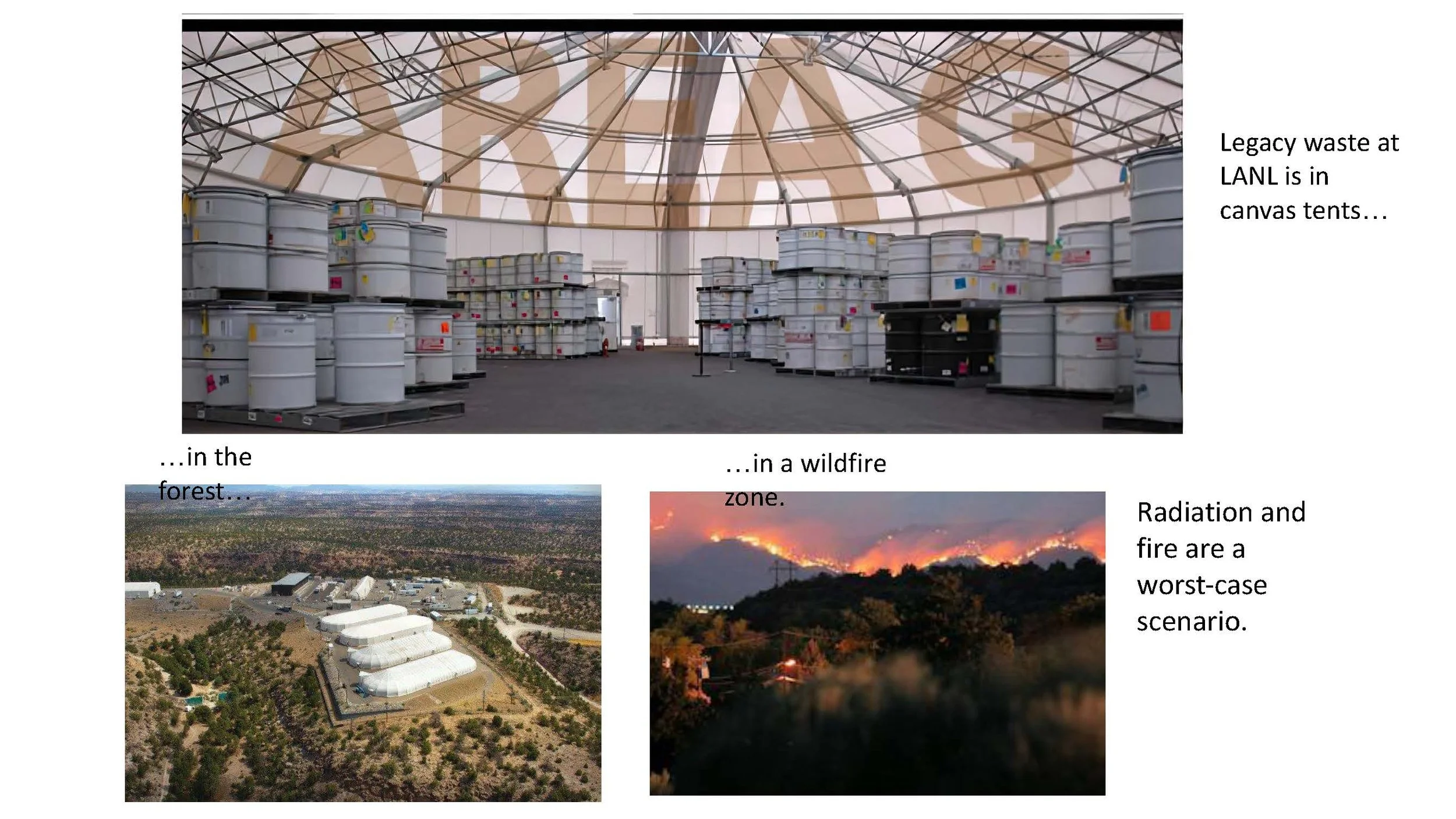
TRU waste staging
Pumped hydropower
Site-wide transportation projects
Alternatives Considered but Eliminated from Detailed Study - the following alternatives were considered because of public input and comments, but eliminated.
Complete closure of LANL
Transfer of current missions/operations from LANL to other sites
Conversion of LANL to an academic laboratory and/or an environmental research
laboratory
Relocation of all nuclear materials and nuclear research to another site
Reduced operations at LANL
Shift funding from weapons work to environmental cleanup
More Information about the LANL SWEIS: